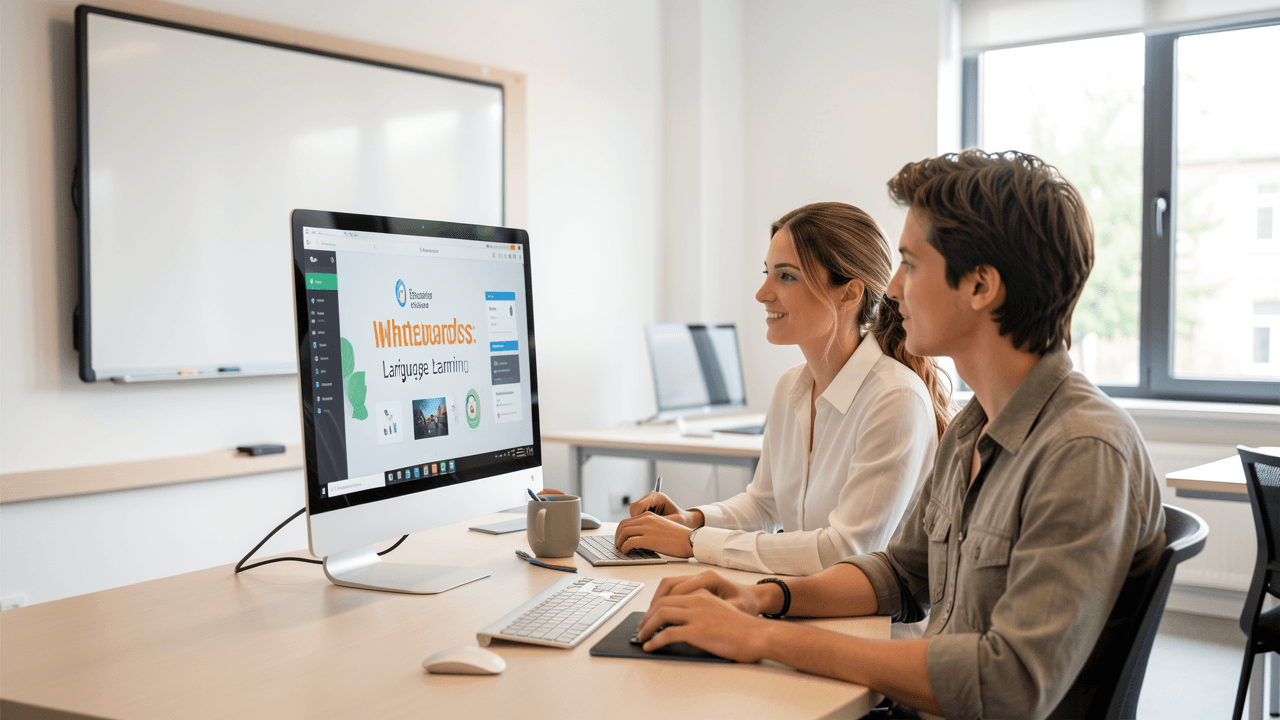
Interactive Whiteboards: Revolutionizing Language Learning
As the field of language education continues to evolve, interactive whiteboards (IWBs) are playing a crucial role in shaping modern classroom experiences. Particularly for English language learners in Japan and Korea, these tools offer innovative ways to develop language skills effectively and efficiently. Leveraging AI, adaptive learning, and interactive features, interactive whiteboards are setting new standards for what language instruction can achieve. Here, we explore the latest trends and practical applications of this technology.
Latest Trends and Developments, 2025–2026
AI-supported Language Practice
One of the most transformative developments in language education technology has been the integration of AI into interactive whiteboards. AI-supported language practice now enables:
- Conversational Role-play: Students can engage in conversations with AI tailored to various proficiency levels, vocabulary needs, and scenarios.
- Automated Feedback: Real-time feedback on pronunciation and fluency helps learners make immediate improvements.
- Personalized Learning Paths: Vocabulary review and lesson content adapt to individual student needs.
- Instant Support: AI offers immediate explanations, translations, and reformulations.
According to HolonIQ, over 65% of the top 20 language-learning platforms have embedded AI tutoring features. This rise highlights the shift towards AI-driven education, steering classroom activities towards authentic and communicative tasks. In interactive-whiteboard lessons, AI becomes an ally in generating dialogue options, annotating visuals, and producing language examples—though teachers should supervise content to avoid inaccuracies.
Interactive and Multimodal Classrooms
Interactive whiteboards have evolved to support multimodal learning, combining:
- Touch and Handwriting Recognition
- Multimedia Playback: Audio and video content enriches lessons.
- Screen Sharing: Students and teachers can collaborate on the board.
- Digital Polls and Quizzes: Instant interaction and assessment.
- Collaborative Canvases: Real-time writing and drawing tasks.
These features sustain communicative interactions as students navigate between different language skills and tasks. TESOL research supports the use of synchronous tools to boost speaking and listening, while asynchronous tools enhance reflective and writing skills. For more on how digital text is integrated into language tasks, see our blog post on the living textbook.
Adaptive Learning and Learner Analytics
The transition to data-driven education is unmistakable. Interactive whiteboards are increasingly part of platforms that track a multitude of performance metrics:
- Vocabulary Retention
- Response Time
- Error Patterns
- Pronunciation Accuracy
This data helps teachers design targeted instruction that maximizes student engagement and learning, such as organizing workshops or group activities around common errors or specific language needs.
Hybrid and Flipped Classroom Models
Many educators now employ hybrid or flipped classroom models, where:
- Pre-Class: Students engage with materials independently.
- In-Class: Interactive whiteboards support collaborative tasks and discussion.
- Post-Class: Online practice and digital portfolios reinforce learning.
In this setting, class time is reserved for interaction, prioritizing speaking and listening through practical, problem-based activities, reducing the time spent on direct instruction.
Communicative and Task-Based Technology Use
The trend towards task-based learning supports activities where technology facilitates real-world tasks:
- Travel Planning
- Workplace Problem Solving
- Cultural Comparisons
This pedagogical shift can be seen in platforms like Duolingo and Cambly, embracing authentic, student-centered learning tasks. Interactive whiteboards provide the dynamic, shared space necessary for these tasks to unfold, leading to productive language use.
Interactive Platforms and “Living” Content
Today's interactive platforms are a fusion of text, audio, and video, allowing for an adaptive curriculum that evolves with student interaction. For further insights, explore our article on spaced repetition in language learning.
Benefits for Japanese and Korean Learners
For Japanese and Korean learners of English, interactive whiteboards offer culturally relevant and personalized learning experiences. The visual and interactive features help bridge language gaps and provide context that might be challenging to grasp through traditional methods.
FAQ
Q: How do interactive whiteboards support language learning?
A: They enable interactive, multimodal lessons that integrate audio, visual, and kinesthetic learning styles, allowing for a more comprehensive approach.
Q: What role does AI play in interactive whiteboards?
A: AI enhances language practice through real-time feedback, personalized lessons, and interactive, scenario-based dialogues.
Q: How are learners' needs addressed using interactive whiteboards?
A: Adaptive learning and analytics identify specific learner needs, guiding targeted instruction and effective use of classroom time.
For more real-world teaching scenarios, visit our use cases page.
Interactive whiteboards are undoubtedly transforming language learning, providing a versatile and dynamic tool to engage students and foster improved learning outcomes. As this technology continues to evolve, it will undoubtedly play an even more significant role in the educational landscape.