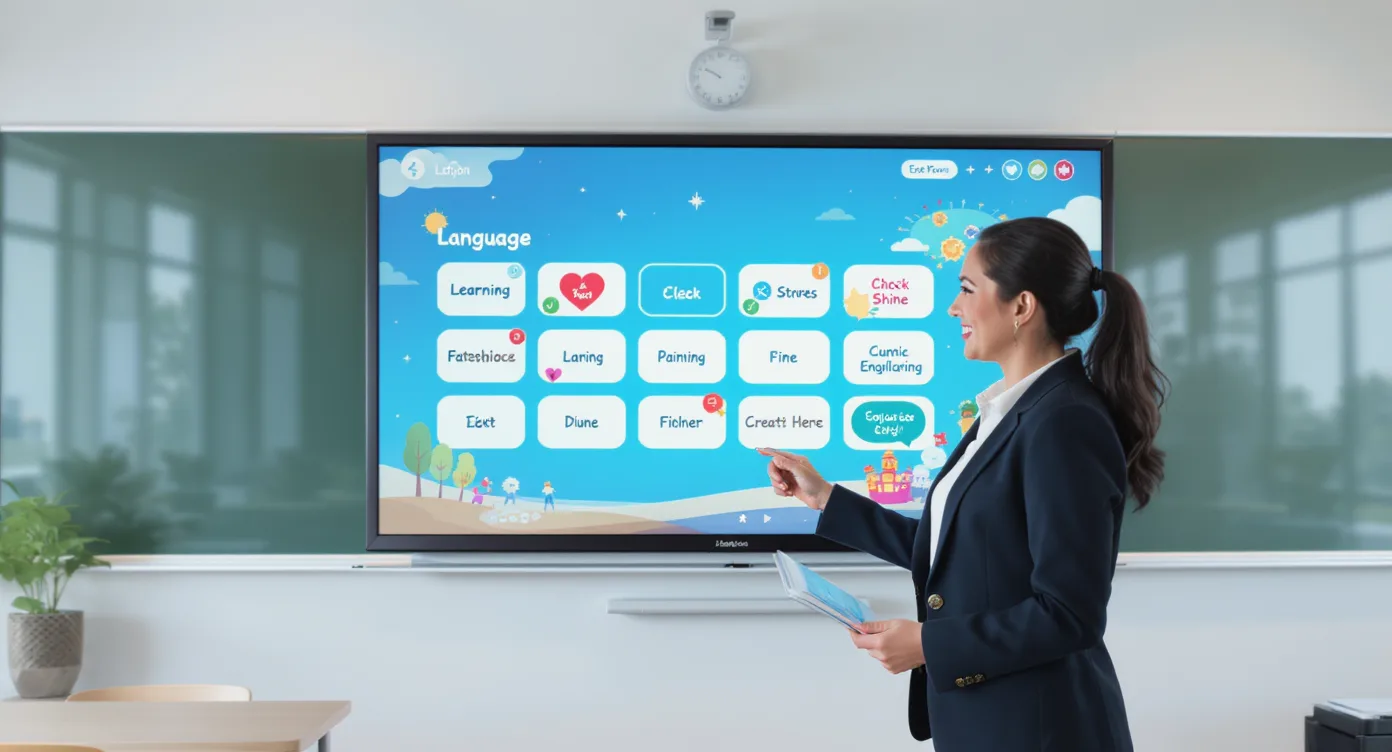
Maximize Language Learning with Interactive Whiteboards
The educational landscape of 2025-2026 is witnessing a transformative shift with the integration of technology, especially in language learning. Among these innovative tools, Interactive Whiteboards (IWBs) have emerged as central players, evolving into smart collaboration hubs that facilitate engaging, personalized, and effective teaching experiences. This blog delves into the latest trends and developments in the use of IWBs for language education, particularly for English learners in Japan and Korea.
Interactive Whiteboards: The Future of Language Education
As language education trends embrace technology, the role of IWBs has expanded beyond being simple teaching aids. They have become pivotal in implementing hybrid learning models, integrating AI, and ensuring multimodal interactivity.
Key Trends Shaping the Use of IWBs
-
AI-Powered Personalization: AI tools are revolutionizing how lessons are curated. Generative AI assists educators in drafting lessons with real-time translation and adaptive content tailored to diverse learners. This personalization enhances learning efficiency and inclusivity across different linguistic backgrounds — a significant advantage for platforms like LokaLingo.
-
Hybrid and Remote Capabilities: Whether in a classroom or part of an online session, IWBs seamlessly integrate video and annotation tools, crucial for maintaining interactive and communicative pedagogy (TESOL).
-
Gamification: By incorporating interactive widgets, quizzes, and manipulatives, IWBs turn mundane language exercises into engaging games, significantly boosting student motivation.
-
Modular Pathways: Non-linear skill-building through personalized, mobile-friendly pathways helps learners advance at their own pace. The inclusion of VR/AR for immersive exercises — such as realistic pronunciation scenarios — adds significant value.
-
Multimodal Literacy: By integrating videos, 3D models, and real-time web content, IWBs enhance language learning, transforming lessons into dynamic explorations of language arts. This helps meet diverse literacy needs and engages a broader range of learning styles (British Council).
Real-World Examples and Case Studies
Ricoh's D6520 and D8600 Series: These IWBs are effectively used in language arts classes to annotate passages, analyze multimedia tones, and encourage active student interactions through labeling exercises.
NYC and Long Island School Districts: These districts capitalize on IWB capabilities to support hybrid lessons, enabling real-time annotations visible to remote students and facilitating seamless file sharing.
Whiteboard.chat: This platform provides customizable whiteboards that support collaborative activities, making vocabulary games and pronunciation quizzes more interactive.
Addressing Common Challenges with IWBs
Language teachers often face challenges in engaging students, catering to diverse learners, and managing hybrid learning environments. IWBs offer several solutions:
- Increasing Engagement: By transforming lectures into "living visuals" through touch interactions with dialogues and videos, lessons become more engaging and communicative (JALT).
- Bridging Hybrid Learning Gaps: Features like live video integration with shared screen capabilities ensure that remote students participate equally.
- Supporting Diverse Learners: Real-time translations, magnified text, and voice commands enhance accessibility, making language learning inclusive.
- Reducing Lesson Prep Workload: Integration with learning management systems (LMS) streamlines the preparation of interactive activities, saving time and effort.
The Growing Importance of IWBs in Modern Language Education
The rapid adoption of IWBs signifies a broader trend toward creating digital, immersive learning environments. With increasing globalization and the rise in language learners, tools like IWBs are indispensable in achieving personalized education goals, thus playing a critical role in platforms like LokaLingo.
For a deeper understanding of effective teaching strategies, you might want to explore our insights on Communicative Language Teaching, Teaching English to Japanese Speakers, and Teaching English to Korean Speakers.
FAQ
Q1: What are the main benefits of using IWBs in language classes?
A1: IWBs enhance engagement through interactive elements, offer personalized learning experiences with AI, and support hybrid learning models for diverse student participation.
Q2: How can IWBs support remote language learners in hybrid settings?
A2: They facilitate real-time annotation sharing and integration with video conferencing tools, ensuring remote learners contribute as effectively as in-person students.
Q3: Are there any challenges associated with implementing IWBs?
A3: While they require initial investment and training, the benefits of enhanced engagement, productivity, and personalization often outweigh these challenges.
Q4: How do IWBs contribute to multimodal literacy in language education?
A4: By incorporating multimedia resources and interactive content, IWBs support various literacy styles, making language lessons more comprehensive and engaging.
In conclusion, as IWBs continue to evolve and integrate with advanced technologies like AI, they will undoubtedly redefine the landscape of language education, making it more engaging, personalized, and accessible for learners worldwide.