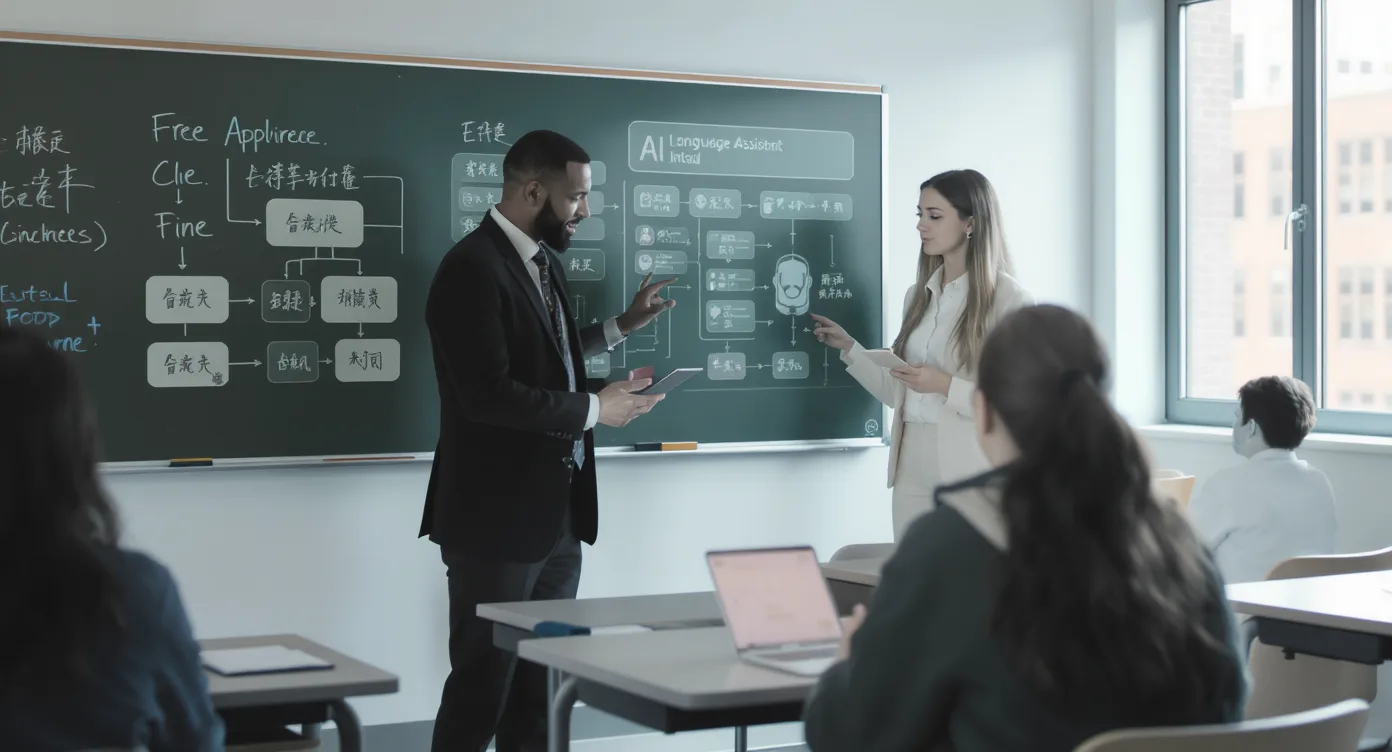
AI Language Assistants: Transforming Education in 2026
In 2026, AI language teaching assistants are revolutionizing the way we learn languages, with a significant impact on English education for Japanese and Korean speakers. The swift integration of AI into classrooms is making personalized, scalable language learning a reality while addressing longstanding challenges in educational settings.
Key Developments in AI Language Education
Innovation in AI has led to a focus on emotional intelligence, real-time personalization, and increased engagement through speech-focused practice. Designed with teacher input, AI platforms provide instant feedback, thus offering crucial insight into students' progress in a crowded classroom environment.
Emotional Intelligence and Personalized Learning
2026 models of AI teaching tools are not just automated response systems; they incorporate emotional intelligence to better connect with students. Platforms like Kyron Learning offer real-time personalized instruction tailored to individual learning styles, bridging gaps for young learners in developing countries. This not only democratizes access to quality education but also results in a 70% higher completion rate compared to traditional methods.
Scalable Speech Practice
Speaking proficiency is a critical area where traditional classroom settings often fall short, especially in crowded environments. AI tools such as Buddy.ai address this by enabling continuous, scalable speaking practice with real-time feedback. These solutions allow students to engage in speaking exercises more frequently and effectively than possible with limited teacher time.
Impact on Teachers and Classrooms
AI has reshaped the role of educators, transitioning them from instructors to facilitators who can provide personalized guidance. By reducing the workload, AI allows teachers to reallocate their time to interact more meaningfully with students. According to recent statistics, 85% of teachers reported using AI tools in 2025, with 55% noting increased interaction time with students.
Moreover, AI platforms like Third Space Learning offer curriculum-aligned language practice using speech recognition, specifically designed to enhance verbal reasoning skills. This aids in developing essential language functionalities within classroom settings.
Overcoming Challenges with AI Solutions
Educators have historically faced multiple challenges—ranging from excessive administrative workloads to providing individualized attention in varied classroom settings. AI offers compelling solutions:
- Reducing Workload and Burnout: By automating administrative tasks and lesson planning, AI tools provide teachers with the ability to prepare efficiently, freeing their time for more direct student engagement.
- Scalable Practice Opportunities: With AI platforms available 24/7, students can practice as often as required, making quality language education accessible even in large classrooms.
- Differentiated Learning: AI can tailor lessons to suit the diverse needs of learners, offering personalized paths based on each student’s background and age.
AI Language Teaching Assistants in Japan and Korea
Specific to teaching English to Japanese and Korean speakers, AI platforms have made significant strides. For instance, LokaLingo integrates AI models with emotional intelligence into platforms like The Living Textbook, facilitating interactive pedagogy and aligning with the unique educational contexts in Japan and Korea.
For further insights, explore our detailed articles on Communicative Language Teaching, Teaching English to Japanese Speakers, and Teaching English to Korean Speakers.
Looking Ahead
The adoption of AI in language education is anticipated to grow exponentially. Projections indicate that the global AI education market, valued at $7.57 billion USD in 2025, is expected to exceed $112 billion USD by 2034. This growth is driven by the need for scalable, personalized education solutions that improve student outcomes and alleviate educator burdens.
Conclusion
AI language teaching assistants in 2026 represent a pivotal shift in educational practices, bridging access and engagement gaps worldwide. By addressing challenges related to scalability and personalization, AI empowers both teachers and students, setting a new standard for language learning.
FAQs
What capabilities do AI language teaching assistants have in 2026? AI teaching assistants in 2026 enhance language learning through emotional intelligence, real-time feedback, and personalized engagement tailored to individual needs.
How do AI tools address teacher burnout? AI helps reduce workload by automating administrative tasks and lesson planning, allowing teachers to focus on meaningful interactions with students.
Are AI language assistants effective in crowded classrooms? Yes, AI tools like Buddy.ai provide scalable speech practice and feedback, making language learning accessible even in large classroom settings.
How is AI integrated into language learning for Japanese and Korean speakers? Platforms such as LokaLingo employ AI with emotional intelligence and adaptability to meet the specific educational needs of Japanese and Korean speakers.