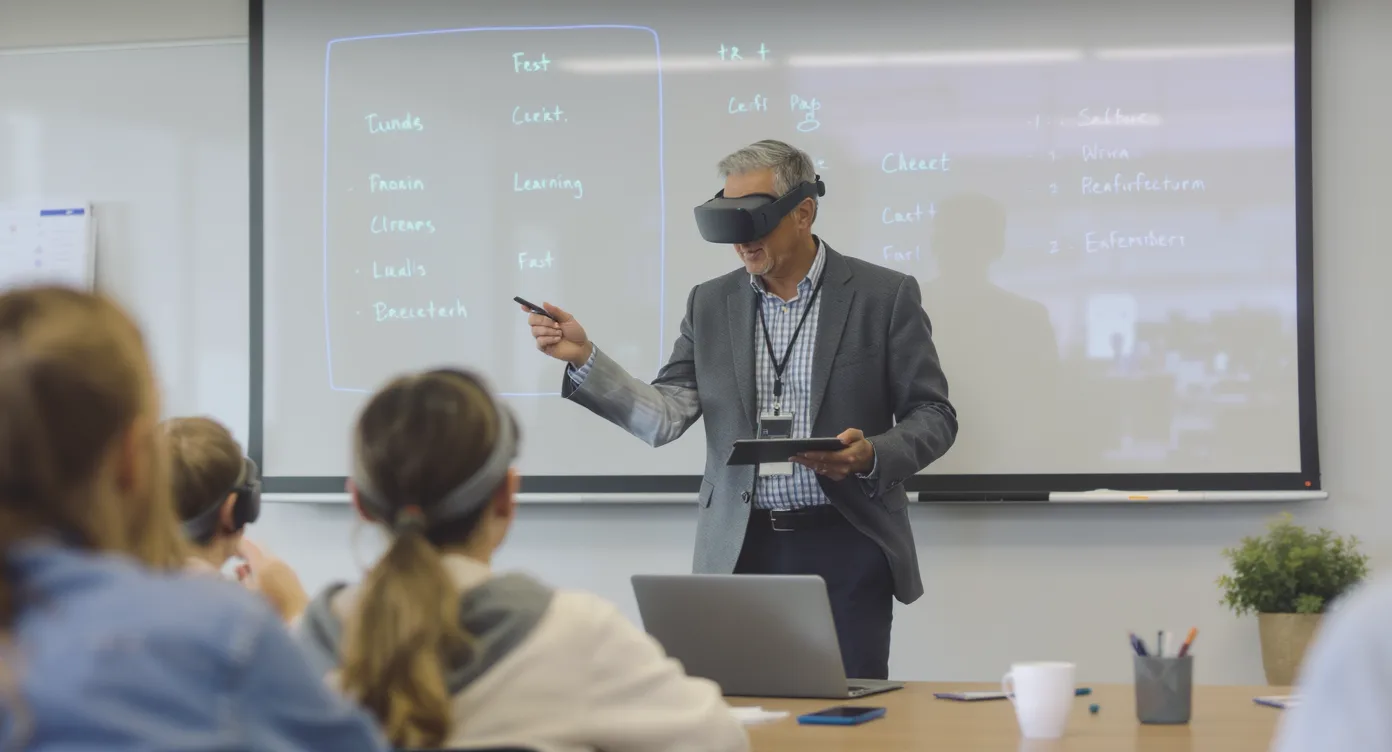
Elevate Language Learning with Interactive Whiteboards
In the digital era, interactive whiteboards (IWBs) are revolutionizing language education, offering tools that blend physical interaction with digital innovation. With AI integration, IWBs are becoming the epicenter of collaborative and engaging learning environments, making them indispensable for language educators. Here, we explore how these cutting-edge tools enhance communicative language teaching, particularly for English learners in Japan and Korea.
Latest Trends in Language Education
The days of passive lectures are fading as language education embraces multimodal and hybrid learning solutions. Contemporary IWBs evolve beyond traditional teaching methods, aligning with trends that prioritize multimodal and visual learning. By 2026, AI-enabled interactive whiteboards boast handwriting-to-text conversion with 99.2% accuracy, multilingual real-time translation, and smart content recommendation. These innovations cater to the dynamic needs of language learners (source).
Ultra-low latency, such as 12 milliseconds on advanced models, allows IWBs to support simultaneous student collaboration through 40-point multi-touch functionality. This seamless integration is essential for hybrid classrooms, ensuring that remote users participate fully in the language learning experience (source).
Key Features Transforming Learning
- AI-Driven Language Tools: IWBs now include multilingual translation and transcription capabilities, crucial for non-native speakers.
- Real-Time Collaboration: With low latency, multiple students collaborate at once, working together to solve language exercises and engaging in dialogue simulations.
- Integrated Multimedia: Multimedia content like videos or audio snippets can be directly embedded, helping students analyze language tones and contexts more deeply.
The interactive visuals boost engagement, with 78% of educators identifying them as primary drivers for student involvement (source).
Interactive Whiteboard Applications in Language Teaching
Language Arts Classrooms
In language arts classrooms, IWBs enable teachers to annotate passages and embed multimedia for tone analysis. Students can manipulate visuals, such as labeling diagrams or exploring timelines, improving retention through touch interaction. This interactive approach aligns with the communicative language teaching philosophy we discuss further in our Communicative Language Teaching blog.
Hybrid Learning Programs
Particularly in hybrid settings, such as those in New York City districts, IWBs seamlessly integrate tools like Zoom or Microsoft Teams to allow real-time annotation visible to both in-person and remote learners. This technology proves invaluable in maintaining lesson continuity during class absences. For more on hybrid strategies, refer to our insights on Teaching English to Japanese Speakers.
Inclusive Learning Environments
Interactive whiteboards are crucial for creating inclusive classrooms. Features such as text magnification and voice command assist students with visual or hearing impairments. Furthermore, translation and captioning tools foster inclusivity for non-native English speakers, a key concern in our article on Teaching English to Korean Speakers.
Overcoming Common Challenges
Teachers often face challenges like low student engagement and the disparities in hybrid settings. IWBs address these issues:
- Low Student Engagement: Transform lessons with interactive visuals and multi-user touch capabilities, which increase student involvement by 78%.
- Hybrid Disparities: Ensure uniform access to educational content with real-time video integration, promoting a cohesive classroom environment.
- Inclusivity for Diverse Learners: Utilizing adaptive AI and visual tools, IWBs cater to diverse learning needs, promoting universal student engagement.
A Closer Look: Real-World Implementations
K-12 Language Classrooms: Institutions like Qtenboard empower up to 30 students in collaborative exercises utilizing AI quizzes and cloud syncing capabilities, mirroring professional multilingual environments (source). These real-world applications demonstrate the integral role IWBs play in modern educational settings.
Budget-Conscious Schools: Solutions like the ViewSonic ViewBoard enhance learning in budget-conscious settings, providing fundamental interactivity for dynamic vocabulary drills without financial strain (source).
The Future of Language Education
With the projected increase in demand for IWBs, expected to reach over $11.2 billion by 2030, the integration of these technologies in education is not just a trend but a movement towards enhanced interactive learning. The adoption of IWBs worldwide exemplifies a shift towards embracing advanced technologies in language education (source).
FAQ
Q1: What are interactive whiteboards? How do they assist in language learning? A1: Interactive whiteboards are digital displays that enable teachers and students to engage with interactive learning materials. In language education, they support the integration of multimedia, real-time collaboration, and AI-driven language tools.
Q2: How do IWBs support hybrid learning environments? A2: IWBs facilitate seamless integration with platforms like Zoom, ensuring that both in-person and remote learners have access to interactive, real-time learning experiences.
Q3: Are interactive whiteboards cost-effective for all educational institutions? A3: While some interactive whiteboards can be costly, options like the ViewSonic ViewBoard provide core functionalities at a lower cost, making them accessible to budget-conscious programs.
Embracing interactive whiteboards in language education is pivotal for educators aiming to enhance student engagement and develop real-world communication skills. Whether teaching English in Korea, Japan, or beyond, integrating IWBs promises a transformative approach to language learning.