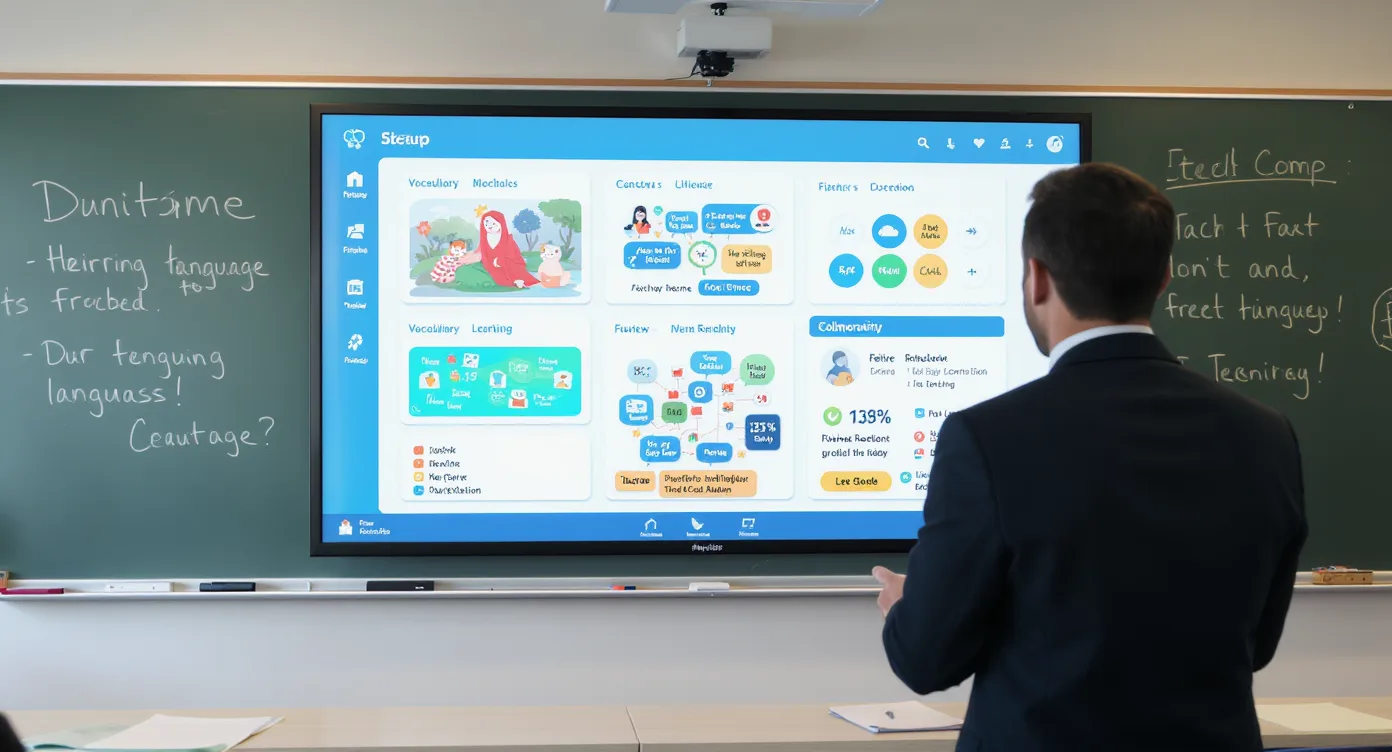
Enhancing Language Learning with Interactive Whiteboards
Interactive whiteboards (IWBs) are transforming the landscape of language education. With the advancements in technology, particularly AI, these digital tools are ushering in a new era for language educators and learners worldwide. At LokaLingo, we understand the importance of technology-driven education, especially in connecting English teachers to Japanese and Korean speakers. In this blog, we explore how IWBs are reshaping language classrooms and overcoming common challenges in language teaching.
The Power of Technology in Language Education
AI-enhanced IWBs are now incredibly dynamic environments that support multimodal, collaborative, and personalized learning. By 2026, they will be characterized by seamless AI integration, allowing for real-time translation, handwriting-to-text conversion, and auto-summarization. Features like 40-point multi-touch interaction and ultra-low latency are increasing IWB's effectiveness in group learning scenarios.
Key Functionalities of AI-powered IWBs
-
Real-Time Translation and Multilingual Support: These features benefit learners in multilingual classrooms, where students actively engage in dynamic language activities like conversation simulations.
-
Interactive Content Creation: Text annotation for tone analysis, vocabulary drills, and multimedia embedding help in making language lessons more immersive.
-
Cloud-Native Integrations: Platforms, such as Google Classroom, allow for easy sharing of annotated lessons with remote learners, promoting connectivity and access to resources.
Why Interactive Whiteboards?
Interactive whiteboards have become indispensable tools, particularly in language education where visual-interactive methods enrich learning experiences. Teachers can use IWBs to manipulate 3D cultural maps, analyze text tones, or practice pronunciation with embedded multimedia clips. By 2027, it's expected that over 60% of K-12 classrooms globally will utilize these technologies.
Real-World Implementations and Success Stories
Several educational institutions have successfully integrated IWBs, leading to increased student engagement and improved learning outcomes. Consider these examples:
-
Unnamed Institution: By rolling out IWBs with adequate faculty training, this school saw higher engagement and retention rates. This approach is scalable to language schools seeking to adopt similar ecosystems.
-
Language Arts Classrooms: Teachers use IWBs to turn static texts into interactive experiences. English learners benefit from the dynamic practice environment.
-
Qtenboard Deployments: Known for its auto-quiz and multilingual features, Qtenboard enhances hybrid language pedagogy effectively.
For more detailed methodologies, consider our article on Communicative Language Teaching, which complements IWB use by promoting practical language usage.
Addressing Challenges with IWBs in Language Education
Common Challenges
| Challenge | Description | IWB Solution | |---------------|----------------------------------|------------------| | Student engagement | Learners often disengage during traditional lectures. | IWBs promote active involvement with touch and gesture controls. | | Accessibility | Diverse needs of learners, including visual or hearing impairments. | Real-time translation, text magnification, and voice commands support inclusive learning. | | Lesson planning | Interactive content requires significant preparatory work. | Integration with LMS tools simplifies the development of engaging lessons. |
Future Implications for Language Educators
As the adoption of AI-enabled IWBs grows, educators need to continuously adapt and refine their teaching methodologies. By 2027, the rise of gesture controls and virtual reality promises to provide even more immersive language learning environments. For language educators, especially those teaching English to Japanese and Korean speakers, these innovations offer tools to enhance teaching effectiveness significantly.
The Growing Market for Interactive Whiteboards
Driven by the needs of hybrid education models, the global market for IWBs and interactive flat panel displays is expected to see significant growth. According to industry reports on Statista, the market could surpass $11.2 billion by 2030 with a CAGR of 8.3%. Understanding these trends can be vital for language schools seeking to stay ahead in providing cutting-edge education.
FAQs
Q: What are the benefits of using interactive whiteboards in language education?
A: They increase engagement through interactive activities, offer real-time translations, and facilitate personalized learning paths.
Q: How do IWBs assist learners with disabilities?
A: IWBs offer accessibility features such as voice commands, text magnification, and captions that accommodate diverse learners.
Q: How do interactive whiteboards integrate with existing classroom technologies?
A: They seamlessly connect with LMS platforms like Google Classroom, allowing for resource sharing and collaboration in both physical and virtual environments.
For more insights on leveraging technology in language teaching, consider visiting British Council, TESOL, and OpenAI for expert perspectives.
As we continue to explore the potential of interactive whiteboards, LokaLingo remains committed to providing the best EdTech solutions for language educators and learners. Stay tuned for more updates on AI-driven tools and their role in enhancing language education.