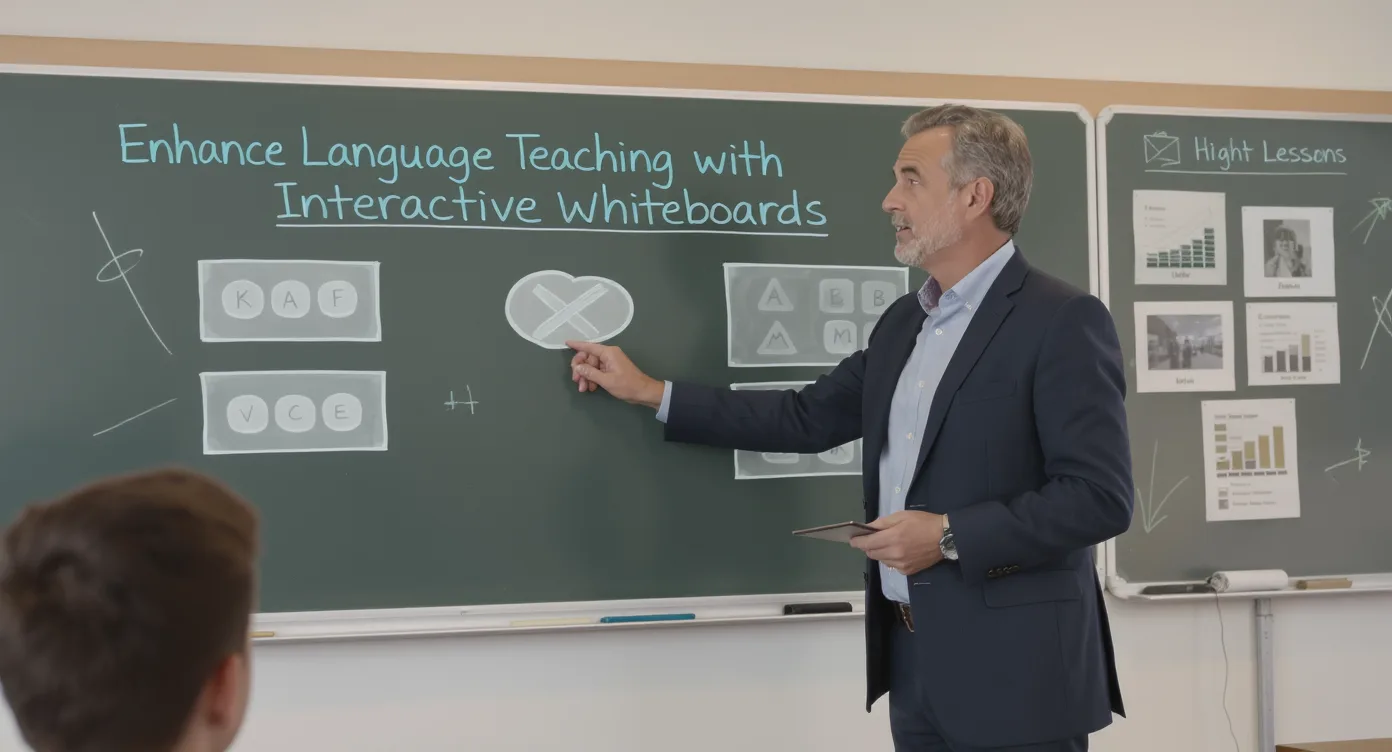
Interactive Whiteboards: Transforming Language Teaching
As the landscape of language education continues to evolve, interactive whiteboards (IWBs) are at the forefront of this transformation, reshaping the way instructors engage with learners. Gone are the days of traditional chalkboards; today's interactive whiteboards are sophisticated, AI-enhanced collaborative hubs driving the future of education. In this blog post, we will explore the integration of IWBs in language teaching, focusing on English instruction for Japanese and Korean speakers, and how they facilitate a modern, interactive learning environment.
The Evolution of Interactive Whiteboards in Language Education
In 2025-2026, IWBs have evolved beyond mere presentation tools into dynamic platforms for hybrid AI-human instruction. The rise of AI in education has shifted some of the traditional teaching burdens, allowing educators to focus on conversational skills and cultural nuances. The integration of real-time grammar and pronunciation feedback through AI on IWBs enables learners to engage in more impactful dialogues.
Key Trends in IWB Language Teaching
-
Hybrid AI-Human Instruction: AI complements human teachers by automating drills and providing personalized dashboards linked to frameworks like the Global Scale of English (GSE). This allows instructors to dedicate more time to cultural nuances and interactive communication, as highlighted in our Communicative Language Teaching article.
-
VR/AR Immersion: IWBs now facilitate immersive learning through VR scenarios, where students can practice languages in virtual settings such as a bustling Parisian café or a Tokyo boardroom.
-
Micro-Learning and Social Formats: Emphasizing engagement and retention, IWBs support micro-learning activities like pair interviews, debates, and role-plays, promoting dynamic interaction among learners.
-
Cultural Intelligence (CQ) Focus: Beyond vocabulary, IWBs offer cultural coaching through interactive scenarios, teaching unwritten rules vital for building trust in Japanese and Korean cultures.
-
In-Person Resurgence: In the face of digital fatigue, IWBs enhance Dogme-style interaction, bringing hands-on, distraction-free communication back to the classroom.
-
Multimodal Integration: Daily life tools such as subtitles and AR overlays integrate seamlessly with classroom instruction, providing a well-rounded learning experience.
These innovations prioritize communicative interaction over rote learning, aligning with dynamic, real-world pedagogical strategies that platforms like The Living Textbook champion.
Case Study Highlights: Real-World IWB Implementations
Berlitz Global Network
Berlitz exemplifies the effective use of IWBs in their hybrid classes. They leverage these boards for AI-driven drills while human teachers lead conversations. The incorporation of interactive cultural modules has notably spurred a 49% growth in their Spanish programs.
Pearson-Aligned Institutions
These schools map GSE "can-do" statements to IWB dashboards, promoting micro-mastery. ESL programs involving pair interviews and debates increase student confidence through tracked progress.
European Language Centers
With AR-enhanced Spanish lessons amid growing enrollment, these centers capitalize on IWBs to enrich language simulations and immersive experiences through VR technologies.
LATAM Schools
In response to rising interest in French and Italian, LATAM schools have embraced IWB cultural events and role-plays, contributing to a "European Renaissance" in the region.
Independent Teacher Examples
Small schools integrating IWBs with in-person Dogme sessions see improved student engagement through collaborative projects conducted entirely in the target language.
These examples, from large networks to independent setups, highlight how IWBs fortify retention through communicative tasks akin to the CIP model.
Challenges and Solutions for Language Teachers Using IWBs
Despite their advantages, IWBs come with challenges such as technological familiarity and initial investment costs. Solutions include structured training for educators, phased technological integration, and leveraging funding or grants available through educational bodies and EdTech partnerships.
FAQs
Q: How do IWBs improve language learning efficiency?
A: IWBs enhance efficiency by automating repetitive exercises, providing real-time feedback, and offering immersive, interactive scenarios tailored to individual learning styles.
Q: What is the role of cultural intelligence in language instruction?
A: Cultural intelligence goes beyond linguistic proficiency to embody cultural empathy and understanding, crucial for effective communication in Japanese and Korean contexts. IWBs facilitate this through role-plays and scenarios.
Q: Are there cost-effective strategies for implementing IWBs in schools?
A: Schools can explore grants, partnerships with EdTech providers, phased implementation strategies, and potential discounts for educational institutions from manufacturers.
For more insights on teaching English to specific cultural audiences, feel free to explore our articles on Teaching English to Japanese Speakers and Teaching English to Korean Speakers.
For further reading on EdTech developments, see sources like EdTech Magazine and ResearchGate.
IWBs are redefining language education with their robust features, making the journey of learning a new language dynamic and engaging. As technology continues to advance, the future of language instruction promises to be even more exciting and integrative.