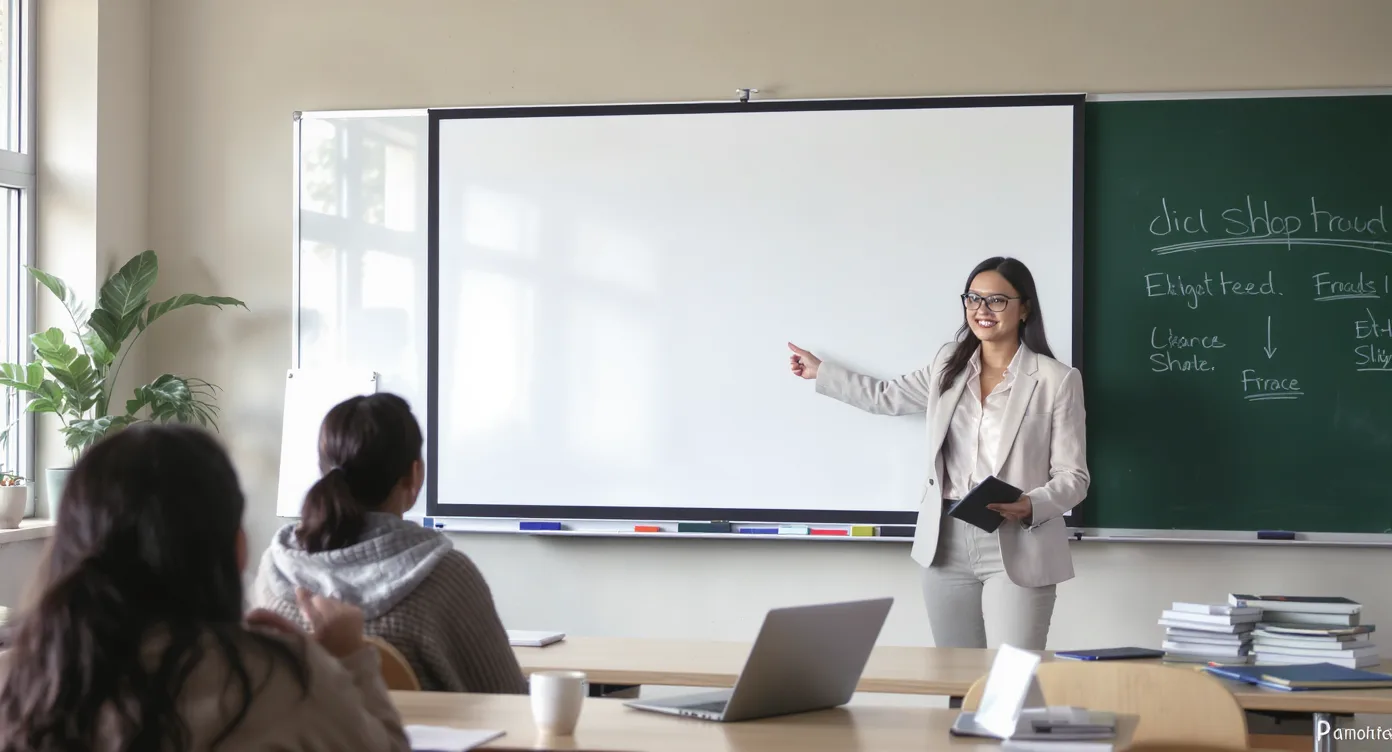
Interactive Whiteboards: Revolutionizing Language Education for Japanese and Korean Learners
In the rapidly evolving landscape of language education, Interactive Whiteboards (IWBs) are emerging as pivotal tools that cater to the growing demand for communicative and interactive teaching methods. For platforms like LokaLingo, which focus on connecting English educators with Japanese and Korean learners, IWBs offer a unique amalgamation of technology and pedagogy, emphasizing real-world communication over traditional grammar-focused teaching.
The Paradigm Shift: From Grammar Drills to Interactional Pedagogy
Recent trends in language education highlight a significant shift towards Communicative Interactional Pedagogy (CIP). This approach prioritizes speaking and listening skills, integrating AI for real-time feedback, gamification, and multimodal content delivery through IWBs. The focus is on engaging learners in dynamic, interactive language environments that replace fixed curricula with personalized learning pathways (HolonIQ, TESOL).
For Japanese and Korean learners, this transformation is critical. Traditional language teaching methods that rely heavily on rote memorization and grammar drills often fail to equip students with the conversational skills necessary for real-world interactions. By leveraging the capabilities of IWBs, educators can facilitate live role-plays, language exchanges, and community-based activities that mimic authentic social interactions.
Key Trends and Developments from 2025-2026
Looking forward to 2025-2026, several key trends forecast the future of language education with IWBs:
-
AI-Driven Personalization: AI algorithms analyze learner error patterns and response times, tailoring lessons to individual goals and preferences. This enables a shift from one-size-fits-all curricula to dynamic, adaptive learning paths (Anthropic).
-
Micro-Learning and Purpose-Driven Content: IWBs facilitate short, engaging sessions that fit into busy schedules, making learning more accessible. This trend aligns with the increasing preference for micro-lessons (15-90 minutes), particularly beneficial for learners who can engage in language practice during commutes or lunch breaks (EdTech Magazine).
-
Immersive Multimodal Literacy: By incorporating cultural contexts and AR/VR technology, IWBs create realistic, immersive learning experiences that enhance comprehension and retention. This is crucial for Japanese and Korean learners who need exposure to diverse linguistic and cultural scenarios.
-
Community-Based Language Exchanges: Collaborative activities facilitated by IWBs encourage learners to engage with peers and native speakers, fostering social bonds and practical language use. This human-centric approach combats the isolation that can result from AI-heavy setups.
Real-World Examples of IWB Integration
Several language education programs demonstrate the successful integration of IWBs:
-
Warsaw Language Teacher's Micro-Sessions: A Polish teacher uses IWBs to deliver 15-minute interactive lessons with real-time AI pronunciation feedback during "language learning walks." This approach enhances vocabulary retention by connecting language practice with daily life scenarios.
-
Duolingo's AI Expansion in Latin America: In regions where in-person access is limited, IWB-linked Duolingo tools provide English immersion, with AI handling instruction and teachers facilitating. This model has scaled language access for over 1,000 immigrant families, boosting proficiency through gamified speaking drills.
-
Pearson's Multimodal Tools in UK Schools: IWBs integrate VR travel simulations and role-playing exercises, increasing ESL speaking participation by 45%. This hands-on learning approach significantly enhances engagement and fluency (ResearchGate, British Council).
Addressing Challenges with IWB-Enabled Solutions
Common Challenges Faced by Language Teachers
-
Learner Isolation: With AI dominating many teaching tools, there's a risk of social disconnection among students. IWBs can counteract this by supporting community exchanges and role-plays that blend digital tools with human interaction.
-
Attention Span Decline: Long lessons can lead to disengagement. IWBs support micro-lessons and gamified content, catering to modern learners' preference for short, impactful sessions.
-
Over-Reliance on Technology: Excessive screen time can hinder deep learning. A balanced hybrid approach—using IWBs for targeted visuals while prioritizing unplugged, communicative activities—can enhance cognitive engagement.
Conclusion: The Future of Language Education with IWBs
As the global EdTech market continues to grow, projected to exceed $20 billion by 2026, IWBs will remain at the forefront of transformative language education. By integrating advanced technologies with interactive pedagogy, IWBs position educators to meet the evolving needs of Japanese and Korean learners, ensuring language learning is engaging, relevant, and effective.
For more insights on communicative language teaching, explore our Communicative Language Teaching article, or learn more about teaching English to specific audiences in Japanese Speakers and Korean Speakers.
FAQ
What are Interactive Whiteboards?
Interactive Whiteboards are digital displays used in classrooms that support touch interaction and can integrate multimedia content, including AI, to enhance teaching and learning.
How do IWBs benefit language learners?
IWBs provide a dynamic platform for interactive lessons, allowing learners to practice speaking and listening skills through real-time feedback and immersive simulations.
Are IWBs suitable for all language levels?
Yes, IWBs can be tailored to suit various language levels, from beginner to advanced, offering personalized content and learning paths.
What challenges do teachers face with traditional methods?
Traditional methods often focus on grammar drills, lacking opportunities for real-world interaction. IWBs address this by facilitating communicative activities that engage students.