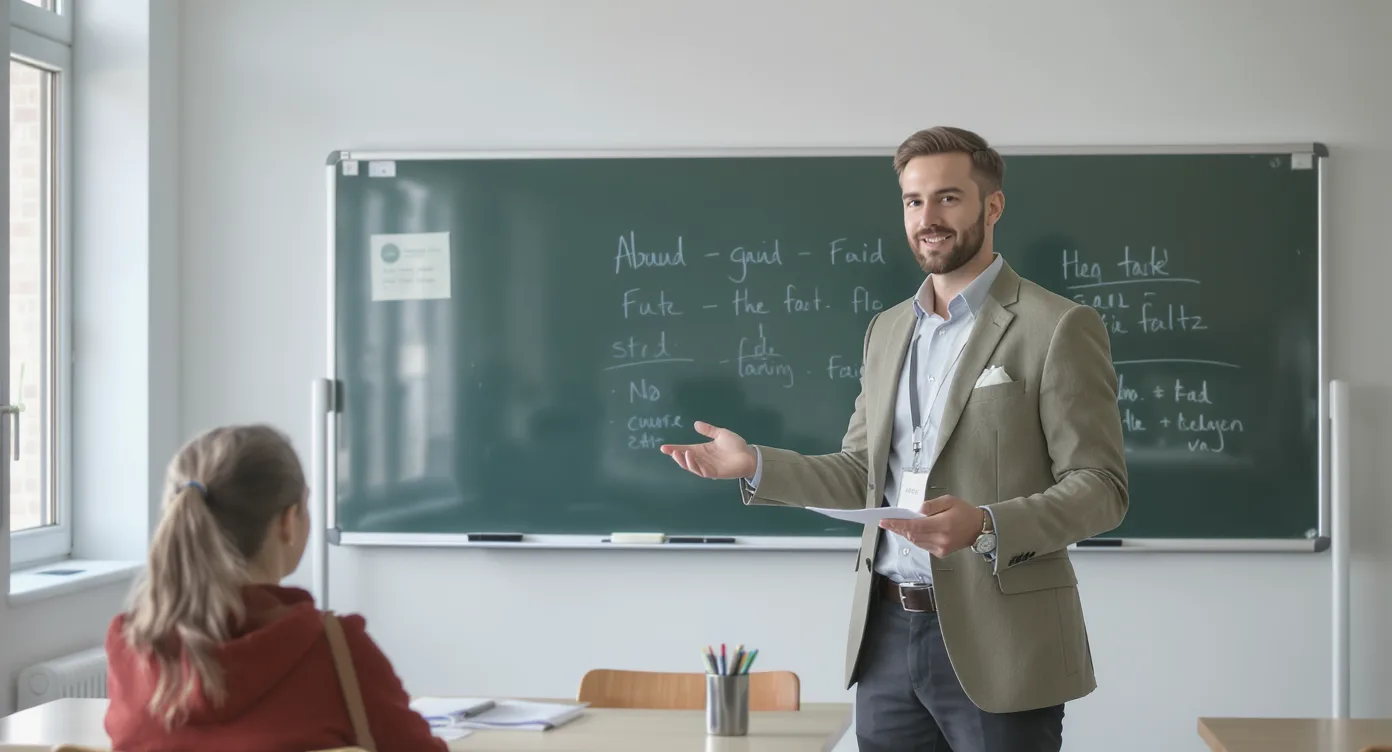
Unlocking Language Mastery with Interactive Whiteboards
Language education is in the midst of a transformative phase, driven by technological advancements reshaping traditional classroom methodologies. Among the breakthrough tools leading this charge are Interactive Whiteboards (IWBs). These have evolved from simple digital boards into central hubs for communicative interactional pedagogy (CIP), particularly beneficial for teaching English to Japanese and Korean speakers.
The Role of IWBs in Modern Language Classrooms
AI-Powered Personalization
In the bustling language classrooms of 2026, IWBs are indispensable for delivering AI-powered personalization. Unlike fixed curricula that often overlook individual learner needs, these smart tools analyze learner error patterns, response times, and skill gaps. The result is a dynamic learning path that allows real-time group feedback, enhancing personal language journeys.
The seamless integration of AI into IWBs has redefined how educators approach teaching English to Japanese and Korean learners, who often face unique challenges in mastering the language's rhythm and intonation. For more insights, visit our Communicative Language Teaching blog.
Emphasis on Speaking and Listening
IWBs are champions for promoting early speaking and listening skills, departing from traditional grammar-heavy approaches. These tools facilitate interactive role-playing, AI-enhanced pronunciation exercises, and live exchanges. For Japanese and Korean learners, this shift is crucial, as they gain confidence through real-world simulations that reflect authentic communication scenarios.
Explore our articles on Teaching English to Japanese Speakers and Teaching English to Korean Speakers for tailored strategies.
Micro-Lessons and Flexible Learning
Gone are the days of monotonous 90-minute sessions. Institutions now favor micro-lessons on IWBs, which deliver targeted skills in concise 15-minute segments. Whether it's business vocabulary or essential travel phrases, these sessions are integrated with purpose-driven activities such as "language learning walks," aligning learning with real-life applications.
Hybrid Human-AI Facilitation
Yet, technology's overwhelming presence can lead to learner isolation, particularly for students used to more traditional methods. IWBs combat this by blending AI tools with human facilitation to foster a supportive environment. Dogme-style, materials-light sessions champion spontaneous interaction and group discussions, reviving the human element often lost in digital classrooms.
For example, schools in Poland have successfully adopted this model with weekly micro-lessons and transit-based practice sessions, underlining how IWB-centered methods engage students while aligning with modern attention spans.
Community and Cultural Integration
IWBs also serve as gateways to community-based exchanges and cultural immersion. They support short-term language exchange groups and utilize multimedia for visual storytelling, increasing cultural awareness and engagement. These lessons connect learners to the broader global community, enriching their linguistic and cultural understanding.
Real-World Implementation
In action, platforms like Duolingo integrate AI tools on IWBs to handle initial English instruction, freeing teachers to assume mentorship roles. Luis von Ahn, Duolingo's founder, predicts expansions that will make speaking practice even more accessible by 2026. For more insights, you can refer to Duolingo.
Interactive teaching is taken further by platforms like Cambly and italki, emphasizing one-on-one practice that complements IWB classroom settings. Their global reach underscores the importance of personalized teaching in effective language learning. See more at Cambly and italki.
Overcoming Challenges with IWBs
| Challenge | Description | IWB-Centric Solutions | |-----------|-------------|-----------------------| | Learner Isolation from AI Overuse | Growing screen fatigue erodes social bonds; AI-generated content risks irrelevance. | Use IWBs for Dogme/group exchanges, blending AI with human facilitation for connections. | | Fixed Curricula vs. Personalization | Traditional levels ignore goals/context; grammar focus delays speaking. | IWBs offer dynamic learning paths personalized through AI, focusing on practical communication. | | Balancing Screen and Human Interaction | Excessive screen time impacts retention and motivation. | Employ IWBs for hybrid sessions with both digital and analog elements, fostering engagement. |
Conclusion
As the global demand for language skills continues to rise, particularly in English among Japanese and Korean learners, IWBs stand as a vital tool in the modern educator's arsenal. Their ability to deliver personalized, engaging, and culturally rich language experiences makes them invaluable in today's classrooms.
FAQ
What are interactive whiteboards used for in language learning?
Interactive whiteboards are used to deliver personalized learning experiences, promote speaking and listening skills, and facilitate community-based exchanges through multimedia and AI-driven tools.
Are IWBs beneficial for teaching English to Japanese and Korean speakers?
Yes, IWBs are particularly advantageous for Japanese and Korean learners due to their interactive nature and ability to simulate real-world communication scenarios, enhancing speaking and listening proficiency.
How do interactive whiteboards integrate with AI?
IWBs use AI to analyze learner patterns and provide personalized feedback, creating dynamic lesson paths that adapt to individual learner needs and promote engaging, effective language learning experiences.
What challenges do IWBs address in language teaching?
They tackle issues like learner isolation from overreliance on AI, fixed curricula, and balancing screen interaction with human facilitation by offering hybrid, dynamic learning experiences.
For a deeper dive into the trends of language education and EdTech's evolving landscape, check out resources on HolonIQ, EdTech Magazine, and TESOL.