Top Tools for Independent Language Teachers in 2026
As we approach 2026, the landscape of language education is evolving rapidly, driven by technological advancements and shifts in learner preferences. Independent language teachers, especially those focusing on teaching English to Japanese and Korean speakers, are at the forefront of this transformation, seeking innovative tools that optimize teaching efficiency while enhancing the learning experience.
The Hybrid High-Tech, High-Touch Model
The hybrid "high-tech, high-touch" model is revolutionizing language teaching. While AI technologies streamline repetitive tasks such as grammar corrections and pronunciation drills, human instructors focus on conversational practice and providing emotional support. Berlitz's hybrid initiatives demonstrate how this model can enhance cultural intelligence (CQ), making it a core component of language education.
Harnessing AI Tutors
AI tutors equipped with emotion recognition are becoming a staple in language learning platforms. They adapt lessons based on learners' emotional cues, fostering a personalized learning path. Duolingo Max utilizes AI to give real-time feedback, allowing teachers to concentrate on interactive and motivational aspects of learning.
Immersive VR Worlds
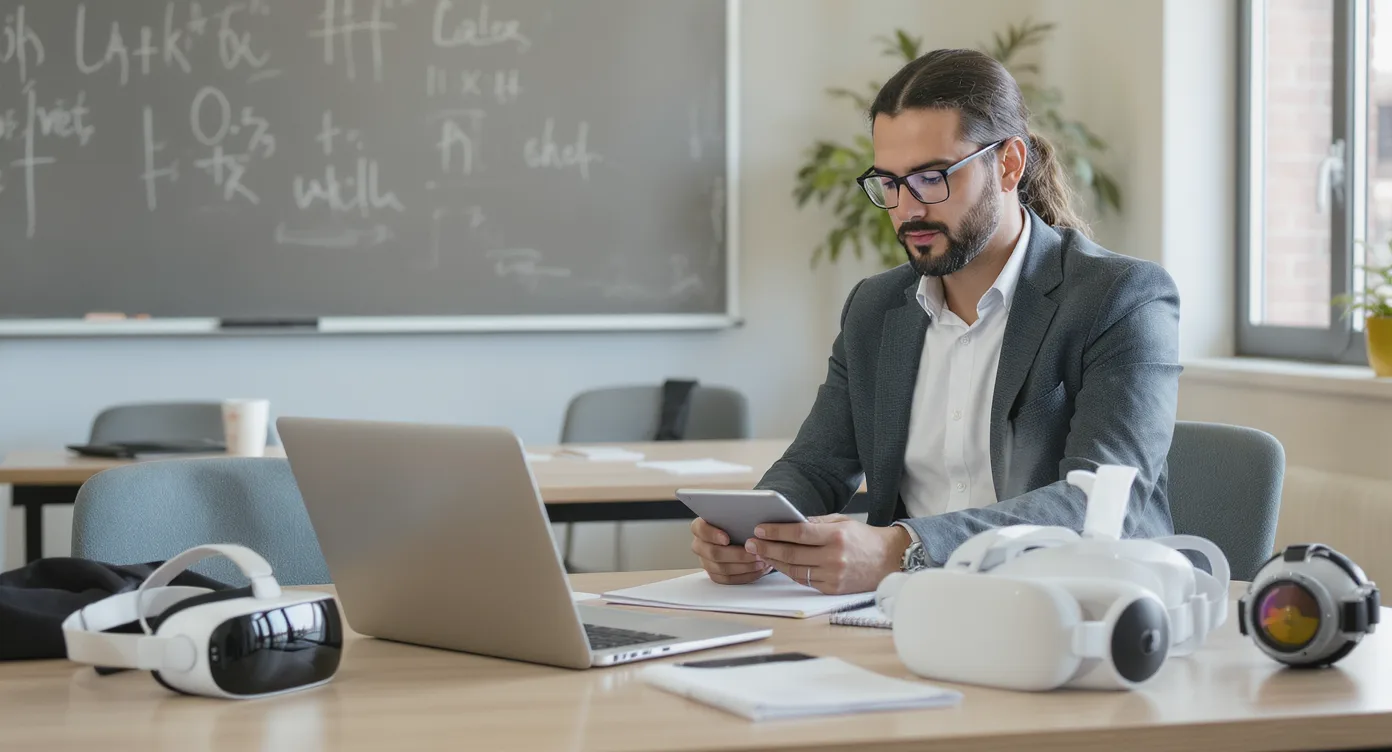
Virtual Reality (VR) is creating immersive environments where learners can navigate through realistic scenarios such as virtual Tokyo boardrooms or Parisian cafés. Platforms like Mondly VR offer scenario-based training, providing language learners with context-rich experiences that are both engaging and educational.
Micro-Learning Through Wearables
Wearables, like smartwatches, deliver micro-learning opportunities that align with daily routines. Language apps integrated on these devices push location-based vocabulary and audio lessons during commutes or while users sleep, making learning seamless and perpetual.
Emphasizing Cultural Intelligence (CQ)
In 2026, having a competitive edge goes beyond mere language fluency; cultural intelligence is paramount. It involves understanding nuanced cultural norms, which is especially critical for English teachers engaging with Japanese and Korean learners. By integrating CQ, teachers can offer lessons that are not just linguistically accurate but culturally resonant.
Building Social Global Communities
Global communities facilitate 24/7 practice and exchange. Platforms like HelloTalk foster peer interactions and mentorship. This approach builds accountability among learners and motivates sustained engagement through a sense of belonging.
In-Person Classes: A Resurgence
While digital platforms offer convenience, in-person classes are experiencing resurgence. Teachers, like Katarzyna Ciszewska, leverage methods such as the Dogme approach for screen-free, interaction-focused learning, enhancing retention and human connection, crucial for learners tired of screen fatigue.
Overcoming Challenges with Technology
Despite technological opportunities, independent teachers face challenges like screen fatigue, repetitive task overload, and balancing tech with human interaction. Here’s how technology can help address these hurdles:
- Screen Fatigue: Conduct screen-free sessions or employ hybrid models using physical spaces free of digital distractions.
- Repetitive Tasks: AI tools like Speechling automate pronunciation exercises, freeing up valuable class time for conversation.
- Cultural Nuances: Use platforms that include CQ modules, ensuring learners understand cultural contexts, enhancing their real-world communication skills.
Best Practices for Classroom Technology
- Hybrid Scheduling: Allocate 70% of learning to AI-driven self-paced drills and 30% to live sessions focusing on communicative interaction.
- Wearable Integration: Assign tasks compatible with wearables, providing consistent, relevant micro-lessons tied to users' routines.
- Balancing Tech and Touch: Maintain a symbiotic relationship between technological tools and personal interaction to maximize educational outcomes.
External Resources for Further Reading
FAQ
Q1: How do independent teachers manage technology with limited resources?
A1: Partnering with platforms like Abblino or Oculus Education can provide scalable solutions, paired with training to maximize adaptive tool usage.
Q2: What is the benefit of VR immersion for language learners?
A2: VR provides a risk-free environment for learners to practice language in realistic settings, thereby enhancing retentive and practical usage.
Q3: How is CQ different from linguistic fluency?
A3: CQ encompasses understanding cultural norms and behaviors, enabling learners to communicate more effectively across different cultures beyond mere language skills.
By leveraging these cutting-edge tools and methodologies, independent language educators can navigate the future of language teaching, offering enriched learning experiences that bridge cultural and linguistic divides.