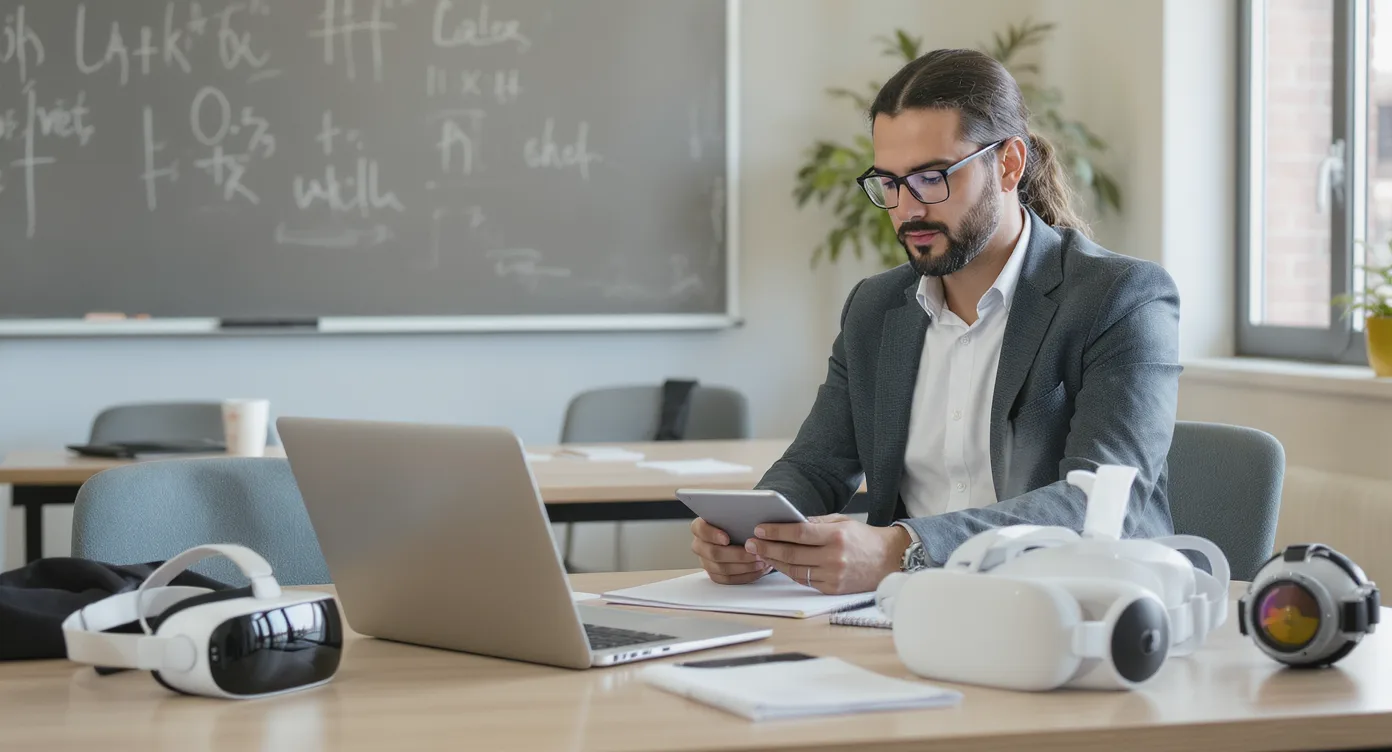
Independent Language Teacher Tools 2026: Embracing the Future
The landscape of language education is evolving at a breakneck speed, driven by advancements in technology, personalized learning mandates, and heightened time constraints. As an independent language educator, staying ahead of these changes can set you apart from the rest. Let's delve into the cutting-edge tools that will define 2026 and see how you can integrate them into your teaching strategies.
AI-Powered Emotional Intelligence and Adaptive Tutoring
AI tutors equipped with emotional intelligence are redefining how we approach teaching. These sophisticated systems can analyze students' facial expressions and voice tones, adjusting the difficulty level of lessons accordingly and providing psychological support when needed[1]. This personalization is a game-changer, leading to 40% faster learning progress compared to traditional methods.
Moreover, adaptive tutors on mainstream platforms deliver real-time, personalized feedback. However, transparency in AI decision-making is critical—educators need insights to monitor and correct student pathways[2]. These tools will allow educators to create a highly customized learning experience.
Immersive VR/AR Language Environments
Virtual reality (VR) and augmented reality (AR) are no longer just futuristic concepts—they are practical tools for immersive language learning. Imagine your students navigating a bustling Parisian café, engaging with native speakers in real-time, all from their living rooms[3].
Recent advancements involve social VR, where learners interact with large language model (LLM)-driven agents for role-playing scenarios, receiving immediate feedback and enhancing their vocabulary and interactional fluency[3]. In 2026, these environments will become even more lifelike, providing indispensable resources for language educators.
Purpose-Driven Micro-Learning
The demand for specific learning interventions over broad courses is on the rise. Micro-learning focuses on concise, relevant content that addresses immediate language learning goals. Tools such as smart wearables—including AR glasses that provide location-based vocabulary and smartwatches that sync with daily tasks—are revolutionizing how learners engage with content[1].
This micro-learning approach allows educators to offer rapid-learning solutions tailored to students' specific needs, such as industry-specific vocabulary or local dialects[2].
The Renaissance of In-Person Learning
Despite the rise of digital education, there is a notable resurgence in demand for in-person classes. Students benefit from the focus and reduced distractions that physical environments offer, making traditional settings a valuable complement to online learning[2]. Methods like the Dogme approach emphasize interaction over digital material, which can further enrich the learning experience.
The Power of Global Learning Communities
Massive online communities facilitate round-the-clock language practice, cultural exchange, and collaborative projects[1]. These platforms encourage peer mentorship and competition, enhancing motivation and leading to sustainable learning outcomes[1].
Moreover, applications seamlessly integrate language learning into everyday digital activities, such as email suggestions, subtitles, and social media feeds, embedding language acquisition into daily interactions[1].
Key Statistics
- 40% faster learning with AI emotional intelligence tutors[1]
- Achievement gains from adaptive tutors when digital access conditions are optimized[2]
FAQs
What are AI-powered emotional tutors? AI emotional tutors analyze students' expressions and tones to customize learning experiences effectively.
How does VR/AR benefit language learning? VR/AR offers immersive scenarios for practical language practice, enhancing vocabulary and fluency.
Why is micro-learning important for language educators? It allows educators to deliver targeted, relevant lessons, addressing specific learner needs quickly.
To learn more about communicative language teaching, check out our blog on communicative language teaching and explore strategies for teaching English to Japanese and Korean speakers.