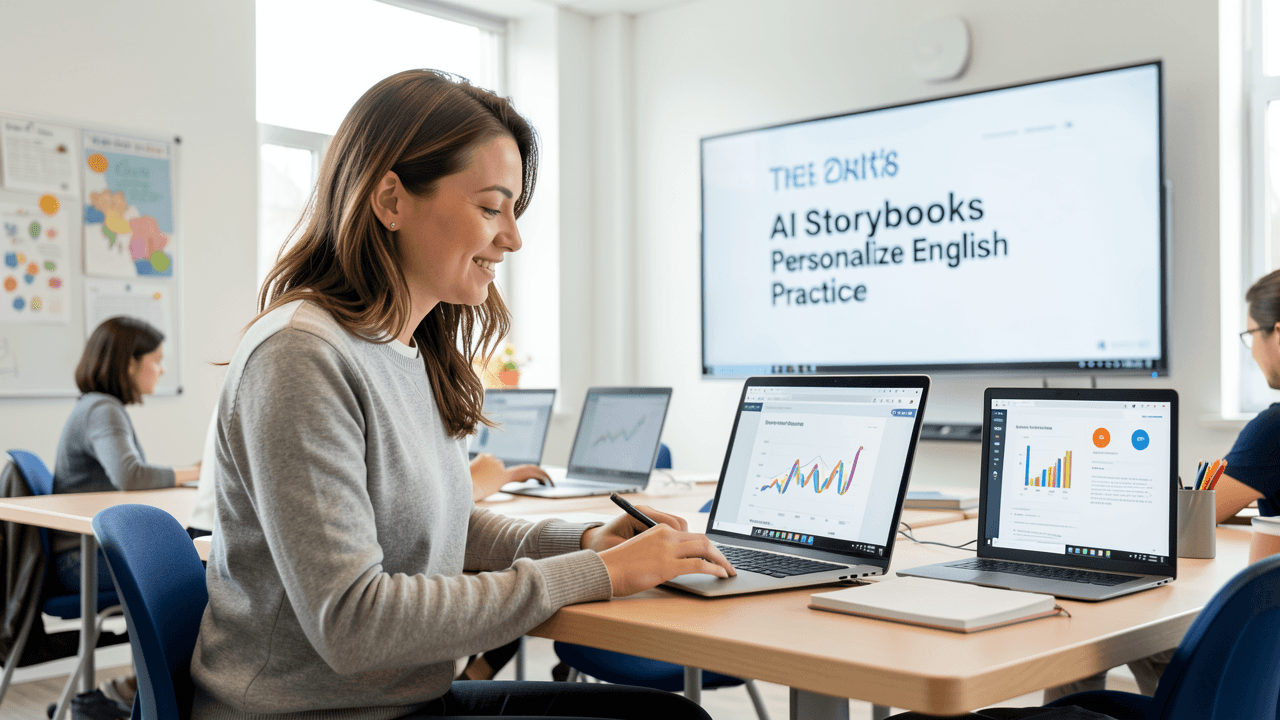
How AI Storybook Platforms Turn Classroom Experiences into Personalized English Speaking Practice
In an era where technology reshapes our educational landscapes, English teachers find themselves at the cusp of a significant transformation: leveraging AI storybook platforms to turn classroom experiences into personalized English speaking practice. This innovative approach combines meaningful content with repeated oral practice, enhancing learners' speaking skills more effectively than traditional drills ever could.
Transforming Classroom Events into Learning Opportunities
Imagine integrating everyday classroom events like field trips, celebrations, projects, or even conflicts into the language learning curriculum. With AI storybooks, these become opportunities for students to create or personalize their own stories. They can then rehearse, retell, role-play, and critically discuss these stories with classmates or AI partners.
The flexibility of these platforms caters to Japanese and Korean speakers striving to learn English, offering personalized experiences that make learning both enjoyable and effective.
The Latest Trends in Language Education for 2025–2026
Generative AI: From Experimentation to Integration
The days of AI as a mere chatbot novelty are fading. Now, AI is embedded in various educational processes, from lesson planning to content creation and assessment.
According to a 2024 Digital Education Council survey, 86% of students used AI in their studies. This statistic reveals the rapid integration of AI within educational frameworks, showcasing its potential as part of the learning routine.
Increasing Accessibility of Speaking Practice
In traditional classes, individual speaking time is limited. AI speech tools, however, offer students countless opportunities to practice privately, receive immediate feedback, and experiment with different responses without fear of errors.
A compelling study in 2025 found that vocational learners utilizing AI in regular speaking programs significantly improved their proficiency in occupational contexts.
Personalization Goes Multimodal
Modern AI platforms can tailor experiences beyond mere vocabulary personalization. They adjust story length, sentence complexity, audio speed, visual aids, and more. These adjustments cater to learners’ cultural backgrounds, interests, and classroom experiences, providing a customized learning journey.
For younger learners, a storybook interface reduces intimidation, guiding them through structured narratives that encourage speaking.
The Pedagogical Framework: Communicative and Interactional
The most valuable use of AI in education aligns with communicative teaching principles:
- Meaning Before Mechanical Accuracy: Ensures learners speak to accomplish real-world communication.
- Interaction: Encourages students to clarify, negotiate, and respond in conversations, fostering understanding and engagement.
- Learner Agency: Allows students to make choices about characters, story outcomes, and other engaging elements.
- Scaffolding: Utilizes visual prompts, sentence stems, and models to support learners before they communicate more freely.
- Recycling: Reinforces useful language through repeated practice.
Real-World Scenarios and Practical Applications
Educators curious about integrating AI into their teaching methods can see real-world applications through platforms like Duolingo, Cambly, and LokaLingo itself, where conversational interactions form the basis of curriculums (/en/blog/living-textbook-learning-20260603). Additionally, implementing spaced repetition strategies is vital for language retention, as explored in our previous discussion (/en/blog/spaced-repetition-language-learning-2026-20260330).
Inspired educators can consider tailored scenarios from our collection of real-world teaching scenarios, illustrating AI's transformative potential in classroom settings.
External Perspectives and Industry Insights
Educators interested in deeper insights into AI's role in education can explore external resources from platforms like OpenAI and TESOL. Further exploration of EdTech advancements can be found through HolonIQ and industry reports from Statista.
Conclusion
AI storybook platforms represent a promising future in language education, elevating learning dynamics through personalization, multimodal tools, and effective pedagogy. By transforming ordinary experiences into language-rich interactions, educators can offer enriched and engaging learning paths to English learners worldwide.
FAQ
Q: How can AI storybooks support English language learning?
A: They transform everyday experiences into interactive stories for personalized English speaking practice, providing tailored opportunities for repetition, feedback, and improvement.
Q: Are AI storybook platforms effective for all age groups?
A: Yes. They adapt complexity, prompts, and themes to suit the learner’s age, interests, and proficiency.
Q: How do AI tools enhance speaking practice?
A: They offer repeated, private practice with real-time feedback, enabling learners to refine their skills without external pressures.
Explore more about how conversational interfaces are shaping curriculums in The Living Textbook: conversations become curriculum.
For more on integrating spaced repetition in language learning, read our article on Spaced Repetition in Language Learning.